
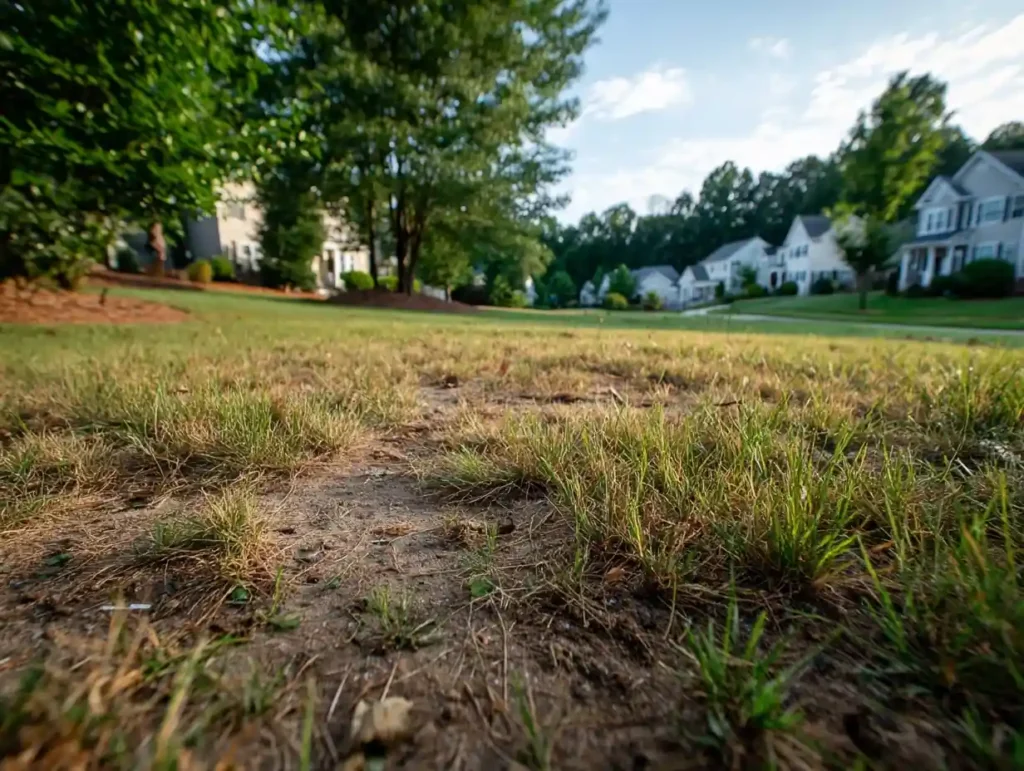
Soil compaction is one of the most common—and most overlooked—reasons residential lawns struggle to thrive. When compaction occurs, soil particles are pressed tightly together, limiting the pore space needed for air and water movement and healthy root growth.
Join our Durham lawn care experts from Martinez Brothers NC Landscaping as we share how to identify the early signs of soil compaction. We aim to help local homeowners take proactive steps before plant growth, turf health, and soil structure are affected in ways that are difficult to reverse.
Table of Contents
What Is Soil Compaction and What Causes It?
Soil compaction happens when the soil in your lawn is pressed down so tightly that the spaces between soil particles shrink. Those spaces are essential because they allow air, water, and nutrients to move freely through the ground. When soil compaction occurs, roots have a harder time growing, water drains more slowly, and the soil becomes dense and difficult for plants to push through.
Heavy Equipment and Repeated Traffic
Lawns that see frequent traffic are more susceptible to compaction, especially when lawn equipment or vehicles move across moist or wet soil. Over time, these repeated passes create dense soil layers that limit root growth and water movement.
Working on Wet or Moist Soil
Soil is far more vulnerable to compaction when it’s wet. Water fills the spaces between soil particles, allowing them to slide and pack together more easily under pressure. When soil moisture levels are high, soil compaction occurs faster and bulk density increases more rapidly than it would in dry soil.
Poor Soil Structure and Texture
When soil aggregates fall apart, individual soil particles settle tightly together, reducing soil porosity and limiting air and water movement. Existing soil that lacks organic matter is especially vulnerable, since organic material helps maintain healthy soil texture and supports natural recovery over time.
Signs of Soil Compaction in Residential Lawns
Recognizing the signs of soil compaction early helps homeowners plan soil testing or corrective lawn services before long-term damage develops.
Standing Water After Rainfall
When soil becomes compacted, the small spaces that normally allow water to move through the ground begin to close up. As soil density increases, lawns become more prone to puddling and surface runoff—even after moderate rainfall—raising the risk of soil erosion and turf damage.

Hard or Crusted Soil Surface
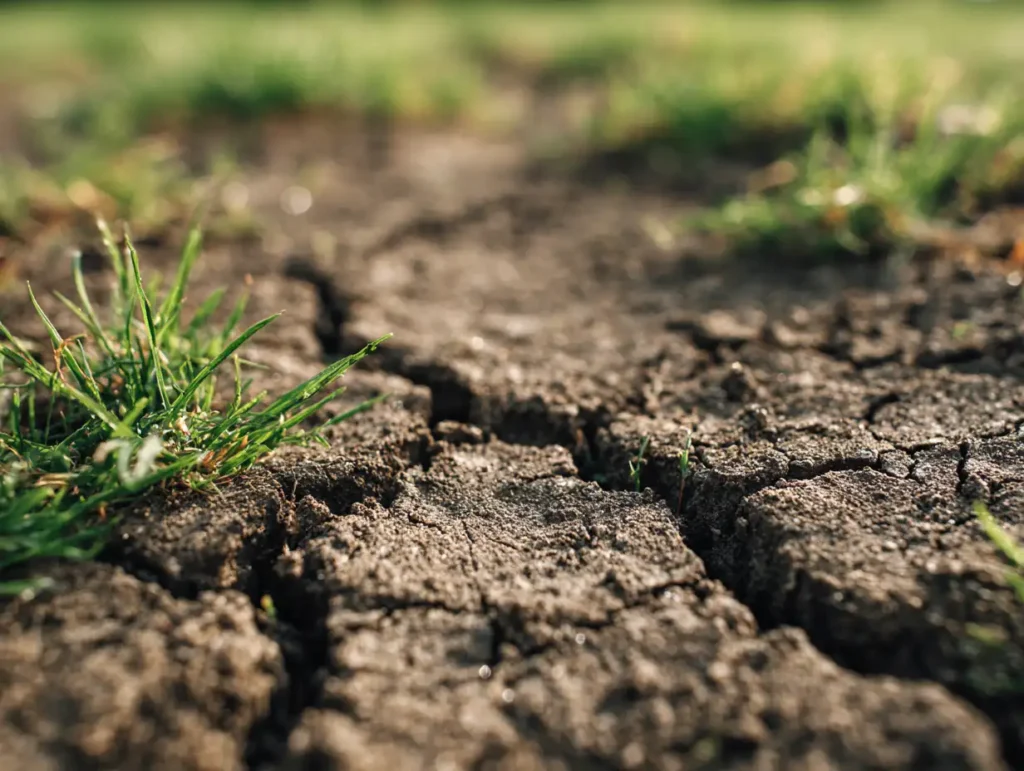
A hard or crusted soil surface is a clear sign that soil particles have been pressed tightly together. This often happens when soil is worked, walked on, or driven over while soil moisture levels are high. Repeated pressure can also cause dry soil to crust over time, especially in clay soil types.
Thinning Grass and Poor Turf Density
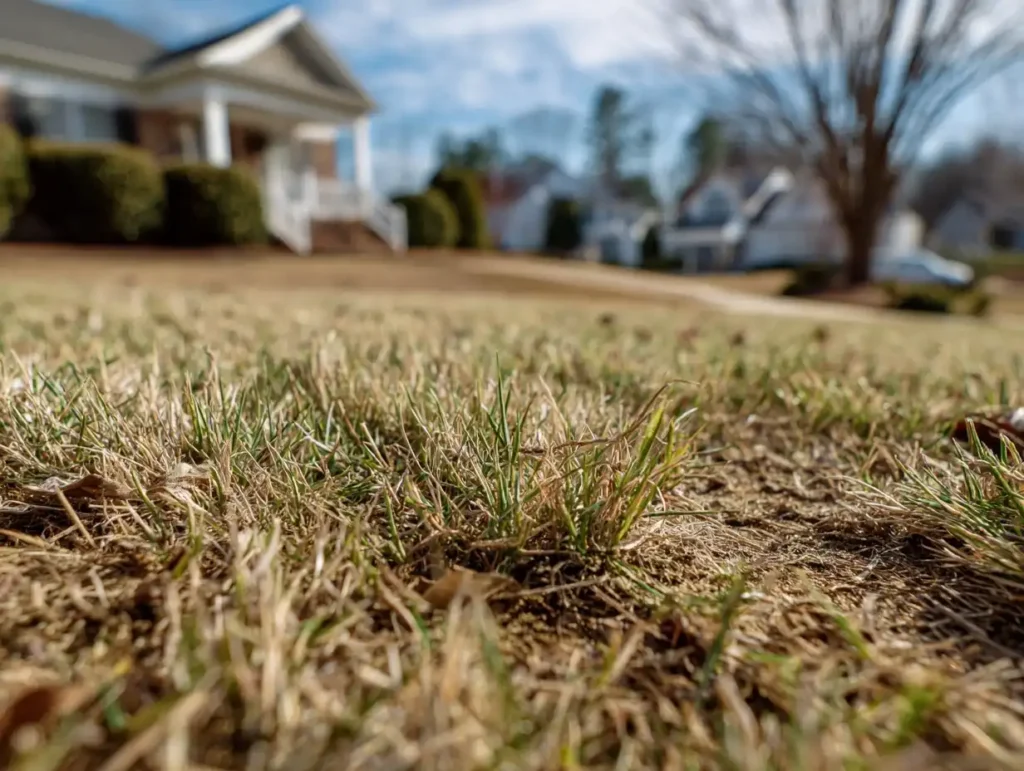
Compacted soil makes it difficult for grass to develop strong root systems. As soil bulk density increases, roots struggle to access water and soil nutrients, which limits overall plant growth. The result is often thinning grass, patchy coverage, and uneven turf density, particularly in high-traffic areas like walkways, play zones, and around softscaping areas like flower beds.

Shallow or Deformed Root Systems
Healthy lawns rely on loose soil with enough pore space for roots to grow freely. When soil surface compaction occurs, plant root systems often become shallow, twisted, or misshapen as they try to grow around dense soil layers. Soil compacted on residential lawns is especially damaging because it prevents roots from reaching deeper soil depth where moisture and stability are found.
Difficulty Driving Stakes Into the Ground
If it feels unusually difficult to push a shovel, stake, or probe into the soil, elevated soil density may be the cause. Compacted soil resists penetration because the mineral particles are tightly packed, leaving little pore space. Using a soil penetrometer or compaction tester allows for a more precise assessment. These tools measure soil mechanics and strength at different depths, helping identify compacted layers that restrict root growth below the surface.

How Soil Compaction Is Tested
Soil compaction testing allows homeowners to confirm problem areas and identify whether shallow compaction or subsoil compaction is present.
Soil Penetrometer Or Soil Compaction Tester
A soil penetrometer measures soil strength and resistance to penetration at various depths, helping identify compacted layers that restrict root growth. This tool provides objective data beyond surface observation.
Visual Root And Water Movement Assessment
Observing root growth patterns, standing water, and surface runoff helps confirm compaction effects. While less precise than a soil compaction test, these indicators support early diagnosis.
How to Fix Soil Compaction in Lawns
Once compacted soil is confirmed, corrective strategies to minimize compaction focus on restoring soil structure and improving pore space.
Core Aeration and Soil Aeration
Core aeration removes small plugs of soil, allowing air and water to move into compacted layers and promoting to root growth. This is one of the most effective ways to reduce soil compaction in established lawns.
Organic Matter and Soil Amendments
Adding organic matter and organic materials improves soil aggregates, increases pore space, and supports soil organisms that naturally loosen soil. Compost-based soil amendments help restore less compacted soil conditions over time.
Irrigation System Support
Lawn irrigation can support soil compaction recovery when it’s used to maintain balanced soil moisture before and after corrective treatments. Light watering before aeration helps soften compacted soil, allowing equipment to penetrate more effectively without creating additional damage. After aeration, proper irrigation helps move air and water into newly opened pore space, encouraging deeper root growth and reducing the chance of surface compaction returning.
Deep Tillage In Severe Cases
Deep tillage implements, specialized tools designed to break up compacted soil layers below the surface, may be required when subsoil compaction severely restricts root growth or turf performance. This approach allows roots, air, and water to penetrate deeper into the soil, but it must be carefully planned by lawn care professionals to avoid creating compaction at the same depth.
Professional Lawn Care for Compacted Soil

Persistent compaction, recurring drainage issues, or declining plant growth may indicate deeper soil problems requiring professional evaluation. A tailored lawn care maintenance plan that includes soil testing, targeted aeration and seeding, and targeted fertilization services can restore soil structure and protect long-term landscape health.
At Martinez Brothers NC Landscaping, we help Durham homeowners identify compacted soil early and implement proven solutions to improve soil properties, promote strong root growth, and support healthier lawns year-round.
Contact Our Durham Lawn Care Experts Today
If you’re noticing signs of soil compaction in your lawn, our team at Martinez Brothers NC Landscaping here to help. Our experienced and skilled Durham landscaping team provides comprehensive lawn care plans that include everything from aeration and weed control to hardscaping, sod installation, and more.
Contact us today to schedule an evaluation of your lawn and take the next step toward a more resilient landscape. Get started by calling us at 919-897-7173 or filling out the form below for a FREE estimate.
Get a free estimate
"*" indicates required fields